
REGIONAL DISHES

NORTHERN VIETNAM

HANOI

Phở | Beef rice noodle soup

Bún chả | Rice vermicelli with grilled pork

Bánh cuốn | Steamed rice rolls filled with pork


SAPA

Xôi ngũ sắc | Five-colour sticky rice


HA LONG BAY

Xôi trắng chả mực | White sticky rice with squid cakes

Bún bề bề | Rice vermicelli with mantis shrimp


NINH BINH – HALONG BAY ON LAND

Cua đồng rang lá lốt | Stir-fried rice-field crabs with lolot leaves


MAI CHAU

Chả cuốn lá bưởi | Grilled pork wrapped in pomelo leaves


MOC CHAU

Cá nướng Pa Pỉnh Tộp | Pa Pỉnh Tộp-style grilled stream fish


DIEN BIEN PHU

Thịt heo xay hấp lá chuối | Minced pork steamed in a banana leaf

Gà nướng Mắc Khén | Grilled chicken with Mắc Khén pepper

CENTRAL VIETNAM

PHONG NHA / QUANG BINH

Gỏi xoài khô mực | Green mango salad with dried squid

Nghêu xào thơm | Stir-fried clams with pineapple


QUANG TRI

Xà lách xoong trộn thịt bò | Watercress salad with beef


HUE

Bánh ram ít | Crispy and chewy sticky rice bites

Bánh bèo | Small steamed rice cakes with shrimp

Bánh khoái | Hue-style crispy pancake


DA NANG

Bánh tráng cuốn thịt heo | Rice paper rolls with pork


HOI AN

Cơm gà | Chicken rice

Cao lầu | Hoi An-style noodles with pork and herbs

SOUTHERN VIETNAM

NHA TRANG

Bánh xèo mực | Crispy Vietnamese pancake with squid


PHAN THIET – MUI NE

Bánh mì xíu mại | Vietnamese baguette with pork meatballs


HO CHI MINH CITY

Cơm tấm | Vietnamese broken rice


MEKONG DELTA

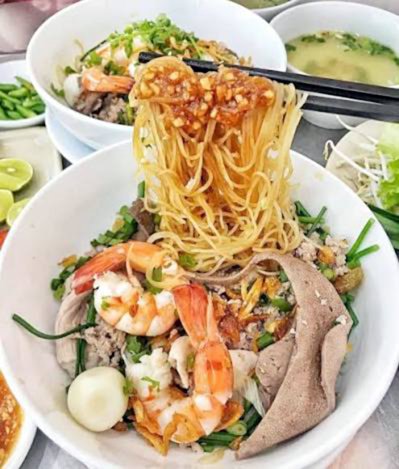
Hủ tiếu Mỹ Tho | My Tho-style rice noodle soup

Nem nướng | Grilled pork skewers

Bánh xèo | Crispy Vietnamese pancakes


PHU QUOC

Gỏi cá trích | Vietnamese herring salad

Bánh canh ghẹ | Thick noodle soup with crab

CENTRAL HIGHLANDS

DA LAT

Gà nướng sốt tiêu xanh | Grilled chicken with green pepper sauce

Sữa đậu nành | Soy milk


BUON MA THUOT

Gà nướng Buôn Đôn | Buon Don-style grilled chicken

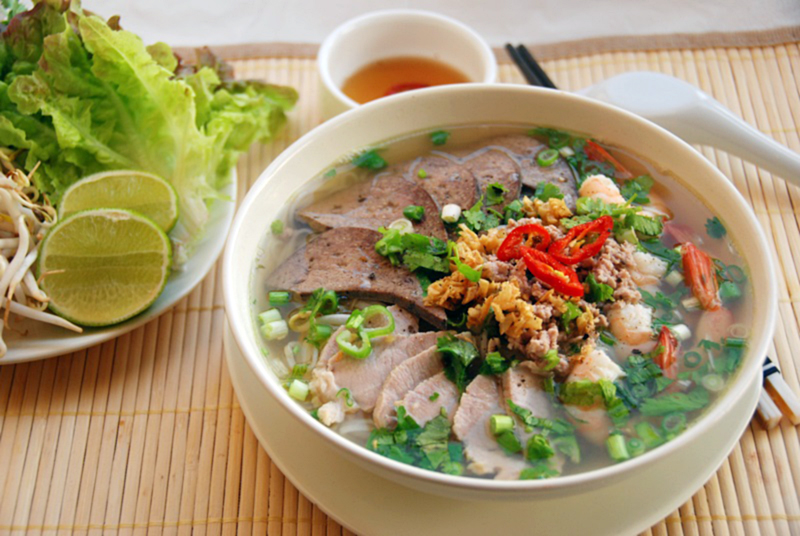
HỦ TIẾU MỸ THO | My Tho-style rice noodle soup

Hủ tiếu Mỹ Tho is generally made with slices of pork, minced pork, liver and a broth prepared from pork bones. Some recipes also include dried shrimp to give the broth greater depth and a subtle sweetness.

This clear, fragrant and naturally flavourful broth is one of the defining characteristics of this typical dish from the Mekong Delta.

Hủ tiếu Mỹ Tho is traditionally served with mung bean sprouts, fried shallots, lime, chilli, pepper and soy sauce. It may also be accompanied by a small soy-based dipping sauce, lightly seasoned with vinegar and sugar.

(Photo: Archive)

The noodles are another essential element of the dish. Thin, slightly translucent and firm, they retain a pleasant texture when cooked, provided they are not overcooked.

Ingredients – Serves 6

  • 500 g rice noodles for hủ tiếu
  • 500 g meaty pork bones
  • 500 g pork neck bones
  • 1 pork heart (about 300 g)
  • 400 g lean pork
  • 10 tiger prawns
  • 3 small dried squid
  • 1 tomato
  • 10 g dried shrimp
  • 500 g sugar cane
  • 200 g mung bean sprouts
  • A few lettuce leaves
  • 10 g garlic chives
  • 50 g celery
  • 5 spring onions
  • 3 limes
  • 2 chillies
  • 7 shallots, including 1 finely chopped
  • 8 cloves garlic, including 1 finely chopped
  • 1 teaspoon xá xíu seasoning powder or xá xíu marinade
  • 1 tablespoon tomato sauce
  • 1 tablespoon tapioca starch
  • 1 tablespoon cornflour
  • ½ tablespoon soy sauce
  • 4 tablespoons oyster sauce
  • 2 tablespoons sesame oil
  • 4 tablespoons vegetable oil
  • 2 teaspoons rock sugar
  • Seasoning to taste: pepper, sugar, salt and seasoning powder


Dried rice noodles
(Photo: Archive)

Xá xíu seasoning powder
(Photo: Archive)

Tapioca starch
(Photo: Archive)

Rock sugar
(Photo: Archive)

Xá xíu marinade sauce
(Photo: Archive)

Preparing the Ingredients

Cut the pork heart in half, then rub it thoroughly with 1 teaspoon salt and the juice of 1 lime. Rinse several times with clean water, then leave to drain.

Prepare the tiger prawns by removing the vein along the back while keeping the heads and shells intact. Rinse them quickly, then drain.

Soak the dried shrimp in water for about 30 minutes to rehydrate them. Drain, then pound them finely in a mortar.

Cut the pork bones and neck bones into pieces, then soak them for about 10 minutes in lightly salted water. Rinse thoroughly and drain.

Bring a saucepan of water to the boil. Blanch the lean pork for a few minutes, just enough to firm up the meat, then remove and set aside.

In the same boiling water, blanch the pork bones for about 5 minutes. Remove them, rinse briefly with clean water to eliminate any impurities, then drain.

Grilling the Ingredients

Lightly crush the sugar cane so that it releases more aroma during cooking.

Cover a grill rack with aluminium foil, then grill the sugar cane, shallots and dried squid one after another until they become fragrant and lightly browned in places.

Remove them from the heat, trim away any overly burnt parts if necessary, then leave them to cool slightly.

For the shallots and dried squid, simply wipe away any blackened areas. Avoid rinsing them after grilling in order to preserve as much of their roasted aroma as possible.

Grilled sugar cane (Photo: Archive)

Preparing the Pork Bone Broth

Pour 3 litres of water into a large saucepan and bring to the boil.

Add the pork bones and neck bones, then boil for a few minutes, carefully skimming off any impurities that rise to the surface.

Add the sugar cane, grilled shallots, grilled dried squid and 1 teaspoon salt.

Reduce the heat and simmer gently for about 3 hours, without completely covering the saucepan. Skim the surface occasionally if necessary to keep the broth clear.

Add a little hot water during cooking if the level of the broth becomes too low.


Cooking the Pork Heart and Prawns

After about 3 hours of cooking, remove the sugar cane from the broth.

Add the pork heart and cook for about 15 minutes, or until just cooked through. Remove it, then immerse it briefly in ice water to help preserve its firm texture. Drain and set aside.

In another saucepan, bring some water to the boil. Add the white parts of the spring onions along with 1 teaspoon seasoning powder.

Add the prawns to the boiling water and cook until they turn a beautiful orange colour.

Remove them immediately, then place them in a bowl of cold water to stop the cooking process and keep the flesh firm and juicy. Drain and set aside.

Preparing the Xá Xíu Pork

Cut the pork into slices about 1 cm thick.

In a small bowl, combine 1 teaspoon xá xíu seasoning powder, 1 tablespoon water, ½ teaspoon salt, ½ teaspoon seasoning powder and ¼ teaspoon sugar.

Add a little shallot and garlic juice, then mix until the seasonings are fully dissolved.

Pour the marinade over the pork and mix thoroughly so that each piece is evenly coated.

Leave to marinate in the refrigerator for about 30 minutes.

Xá xíu pork (Photo: Archive)

Heat 2 tablespoons oil in a frying pan.

Once the oil is hot, add the pork and sear over medium heat until nicely browned on both sides.

Remove from the heat and set aside.

Preparing the Dipping Sauce

Wash the tomato, cut it into small pieces, then finely chop it.

In a bowl, combine 4 tablespoons oyster sauce, ½ tablespoon soy sauce, 2 tablespoons sesame oil and 1 tablespoon tomato sauce. Set aside.

In a second bowl, mix 1 tablespoon tapioca starch, 1 tablespoon cornflour and 2 tablespoons water until completely smooth and free of lumps.

Heat 2 tablespoons oil in a frying pan. Add the chopped garlic and sauté until fragrant. Add the crushed dried shrimp and stir-fry briefly.

Dipping sauce (Photo: Archive)

Add the tomato and continue cooking for about 1 minute. Remove from the heat, leave to cool slightly, then blend until smooth.

Return the blended mixture to the pan and heat gently. Add the oyster sauce mixture prepared earlier along with 2½ tablespoons sugar, then mix well.

Gradually add a little pork bone broth, depending on the amount of sauce you would like, then simmer over low heat for a few minutes.

Gradually stir in the starch mixture, stirring continuously, until the sauce becomes smooth and slightly thickened.

Taste and adjust the seasoning if necessary, then remove from the heat.

Tip: Add the starch mixture gradually, as the sauce thickens quickly. It should remain slightly creamy and fluid enough to serve with the noodles.

Finishing the Preparation

Cut the pork heart and xá xíu pork into thin slices.

Wash the mung bean sprouts, spring onions, garlic chives and accompanying vegetables thoroughly, then drain them well. Cut the chillies into thin slices.

Add 2 teaspoons rock sugar, 2 teaspoons salt and 2 teaspoons seasoning powder to the broth. Stir, taste and adjust the seasoning according to your preference.

Bring about 500 ml water to the boil in a saucepan. Quickly blanch the spring onions and garlic chives, then remove and drain them.

Next, place the hủ tiếu noodles in the boiling water for a few moments, just long enough to soften them without making them too soft. Drain thoroughly.

Blanching the hủ tiếu noodles (Photo: Archive)

For Dry Hủ Tiếu

Place a portion of noodles in a bowl, then add the mung bean sprouts, garlic chives, fried shallots and a little of the sauce prepared earlier.

Arrange a few slices of pork heart and xá xíu pork on top, along with a prawn.

Sprinkle with spring onions, ground pepper and a few slices of chilli.

Serve the broth separately in a small bowl, garnished with spring onions and garlic chives.

Dry Hủ tiếu (Photo: Archive)

For Hủ Tiếu Soup

Place the noodles in a bowl with some mung bean sprouts, garlic chives and fried shallots.

Add a few slices of pork heart and xá xíu pork, along with a prawn.

Pour the piping hot broth over the top, then finish with a little spring onion, ground pepper and a few slices of chilli.

Hủ tiếu soup (Photo: Archive)

My Tho-style rice noodle soup

(Photo: Archive)

Serving and Enjoying

When served, Hủ tiếu Mỹ Tho is appreciated for its fragrant, slightly sweet broth and the richness of its accompanying sauce.

The noodles pair beautifully with the fresh vegetables, prawns, xá xíu pork and pork heart, creating a pleasant combination of flavours and textures.

Depending on your preference, Hủ tiếu Mỹ Tho can be enjoyed dry, with the sauce and broth served separately, or as a soup, with the piping hot broth poured directly over the noodles.

Enjoy your meal!