HA NOI

Hanoi, “the city between the rivers”, is the capital of Vietnam. Located in the north of the country, at the heart of the Red River Delta, it had a population of around 7.5 million in 2018, including approximately 2.6 million in the central urban area. Its metropolitan area is home to nearly 16 million people.
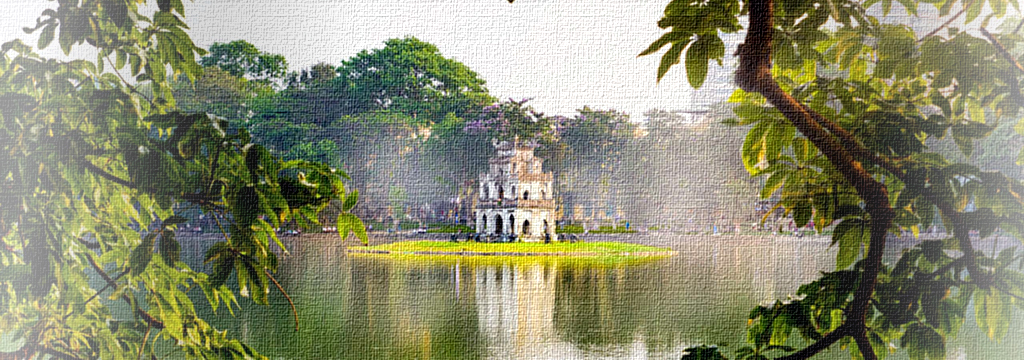
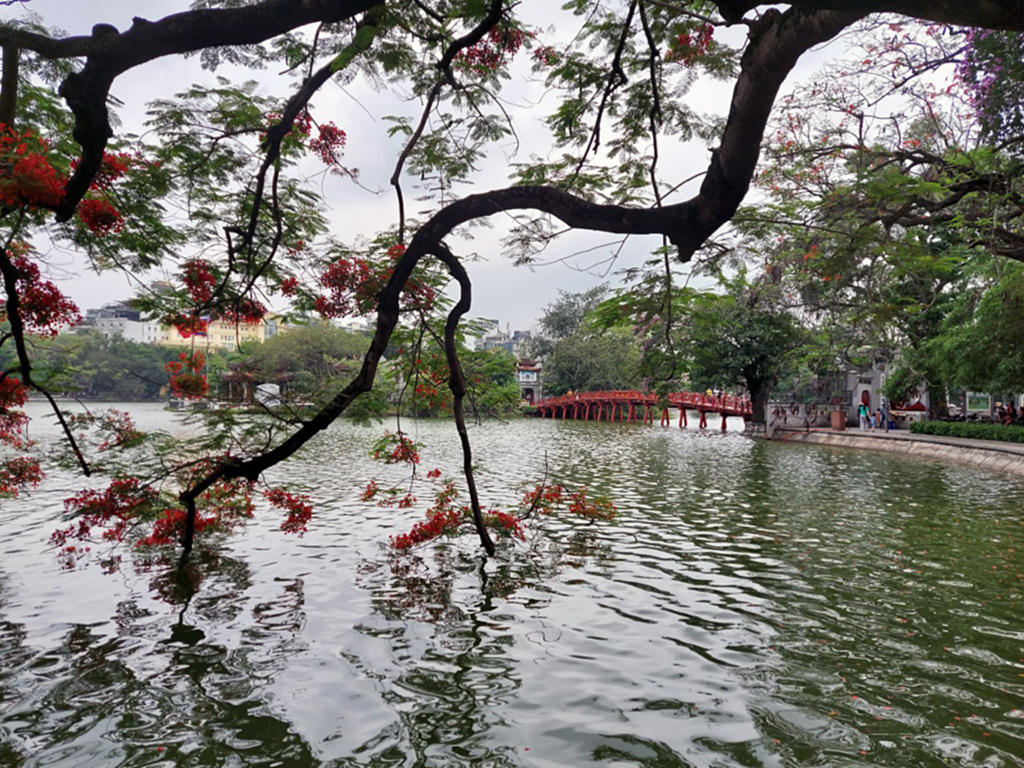
Hanoi’s urban landscape is characterised by its many lakes, broad tree-lined avenues, bustling Old Quarter dotted with religious buildings, former French Quarter and rapidly expanding suburbs. At the heart of the ancient citadel lies the Imperial Citadel of Thăng Long, a UNESCO World Heritage Site.

Hồ gươm (Photo: Huế Voyage)

Best Time to Visit Hanoi

Hanoi has four distinct seasons, each with its own charm, making the Vietnamese capital an appealing destination throughout the year.


Places to Visit in Hanoi

Hoan Kiem Lake

Located in the heart of Hanoi, Hoan Kiem Lake, also known as the Lake of the Returned Sword, is one of the most iconic landmarks in the Vietnamese capital. This natural freshwater lake covers an area of around 12 hectares and lies in Hoan Kiem District, which takes its name from the lake.

Over time, the lake has been known by several names. It was once called Luc Thuy Lake because of the green colour of its water, and Thuy Quan Lake because it was formerly used for naval military exercises. Towards the end of the Le Dynasty, it was also known as Ta Vong Lake and Huu Vong Lake.
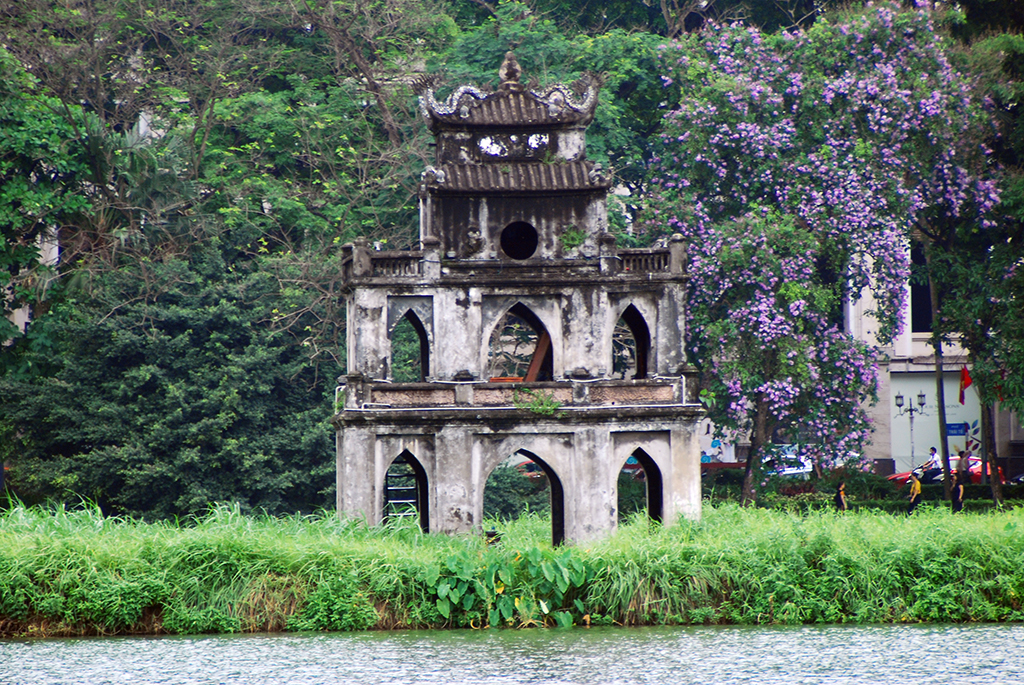
Hoàn Kiếm Lak (Photo: Archive)

Its current name, Hoan Kiem, dates back to the early 15th century and is linked to the famous legend of King Le Loi. According to the legend, after driving out the Ming invaders with the help of a magical sword lent to him by the Dragon King, the king was one day sailing on the lake when a golden turtle emerged from the water. It asked him to return the sacred sword. The king handed it back, and the turtle immediately disappeared beneath the surface.
Since this legendary event, the lake has been known as Hoan Kiem, meaning “the Returned Sword”. Today, it remains a powerful symbol of Hanoi and an essential place to visit for both local residents and travellers.
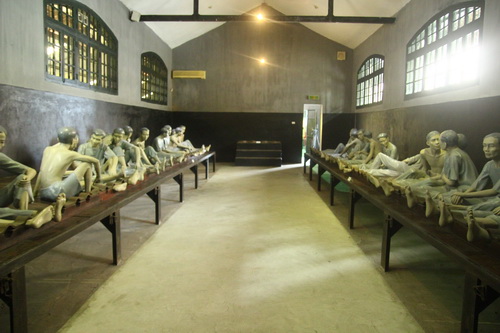
 

Hoa Lò Prison

(Photo: Archive)

Known during the colonial period as the Maison Centrale, Hỏa Lò Prison was built by the French in 1896 in the heart of Hanoi. It was located in an area once home to many craftsmen and merchants specialising in the production and sale of wood- and charcoal-burning stoves.
Its main entrance opened onto Hỏa Lò Street, whose name can be translated as “furnace” or “stove”, which gave the prison its name. Covering an area of 12,908 m², it was at the time one of the largest prisons in Indochina.

During the Vietnam War, between 1964 and 1973, the prison was used to detain captured American pilots until their release following the 1973 Paris Peace Accords.
American prisoners of war nicknamed Hỏa Lò Prison the “Hanoi Hilton”. Among the best known detainees was John McCain, who later became a United States senator.

Hanoi Old Quarter

One of the most distinctive features of Hanoi’s Old Quarter is its network of traditional craft and trading streets. In the past, artisans from villages surrounding the ancient city of Thăng Long settled here according to their trades, creating specialised neighbourhoods. Trading boats could reach deep into the area to exchange goods, helping these activities to flourish.
Over time, the products made or sold on each street gave their names to the streets themselves. This is why many street names begin with the word “Hàng”, meaning “goods” or “shop”, with each street traditionally associated with a particular type of product.
Today, some streets still retain part of their traditional activities, such as Hàng Mã, Hàng Tre, Hàng Thiếc and Thuốc Bắc. Others have changed their focus while remaining specialised: Hàng Quạt is now known for

(Photo: Huế Voyage)

religious and ceremonial items, Hàng Buồm for confectionery, while Mã Mây has largely developed around tourism services.

The Old Quarter is also distinguished by its traditional architecture. Many “tube houses” can still be found here, with narrow façades, deep interiors and sloping tiled roofs. Typical of historic trading districts, these houses served simultaneously as homes, workshops and shops.
Built mainly during the 18th and 19th centuries, they have strongly shaped the image of Hanoi and inspired many painters and poets. Before this period, most houses were thatched; tiled roofs were generally found only on the homes of wealthy families and Chinese communities.

The former Imperial Citadel of Thang Long

(Photo: Archive)

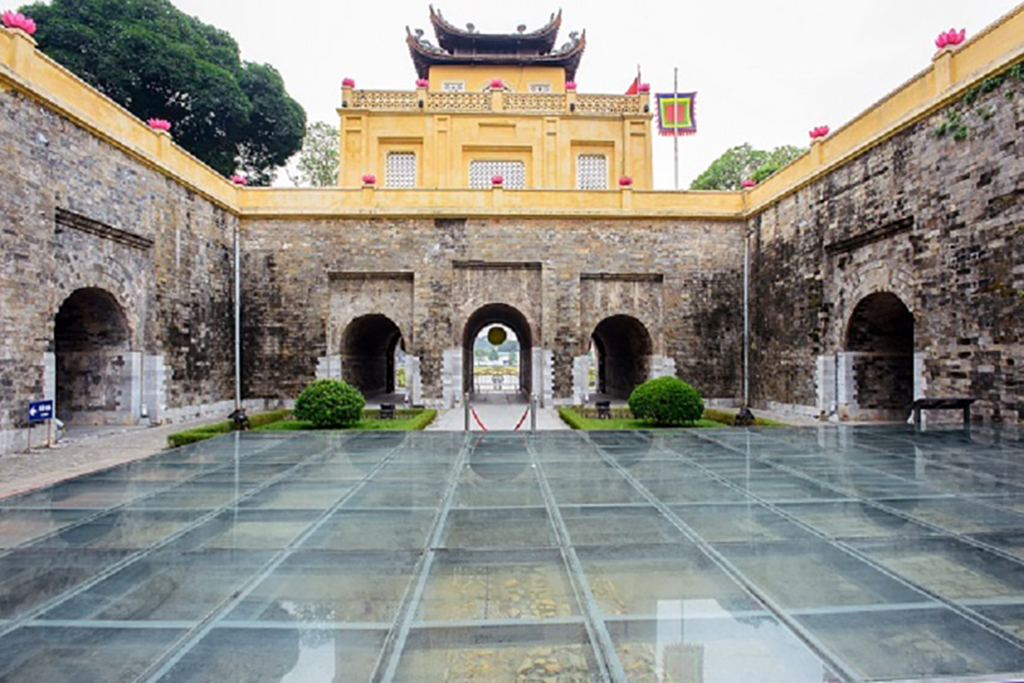
The former Imperial Citadel of Thăng Long has a history spanning more than a thousand years. It served as the centre of power under several major Vietnamese dynasties, including the Lý, Trần and Lê dynasties.
This vast complex includes structures that are still visible today, as well as numerous remains buried underground. Archaeological excavations carried out at the site have revealed valuable evidence of the political, cultural and historical importance of the former capital. It was here that rituals, ceremonies and major decisions concerning the life of the nation took place.

The Imperial Citadel of Thăng Long was not only the seat of royal power, but also a major cultural and administrative centre of Vietnam for many centuries. The different archaeological layers uncovered at the site reflect the continuity of its central role throughout history.
On 31 July 2010, the Central Sector of the Imperial Citadel of Thăng Long in Hanoi was inscribed on the UNESCO World Heritage List. Its Outstanding Universal Value is based in particular on three elements: its long cultural history, the continuity of its role as a centre of power, and the richness and diversity of its archaeological remains.

Ba Dinh Square

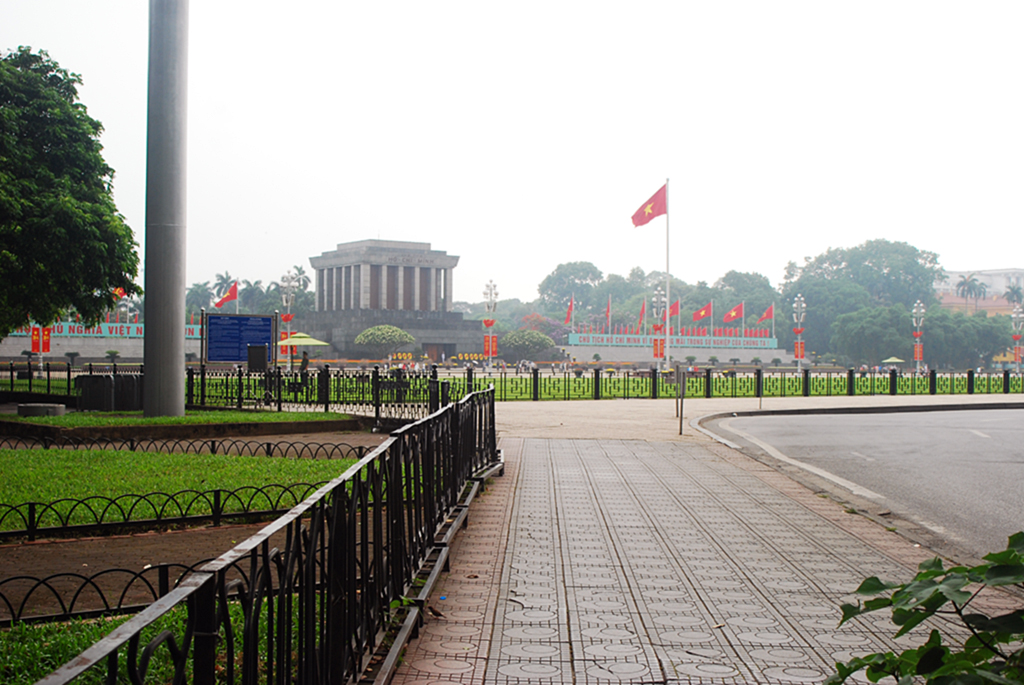
Ba Dinh Square is the largest square in Vietnam and one of the most important sites in the country’s modern history. It is also home to the Ho Chi Minh Mausoleum.
During the colonial period, after the French took control of Hanoi, much of the former citadel was dismantled, with the exception of the Northern Gate, which was preserved as a historical landmark. The area was later redesigned by French architects to become an administrative centre. Khan Hill was levelled, and a garden was created on the site, known as Puginier Garden.

(Photo: Huế Voyage)

Ba Dinh Square is best known for the historic event of 2 September 1945. On that day, President Ho Chi Minh read the Declaration of Independence there, proclaiming the establishment of the Democratic Republic of Vietnam.
Following this event, Ba Dinh Garden gradually became known among Hanoi residents as “Ba Dinh Square”, or the “Independence Square”. Part of Puginier Street was also renamed Independence Street.

The Ho Chi Minh Mausoleum

(Photo: Archive)

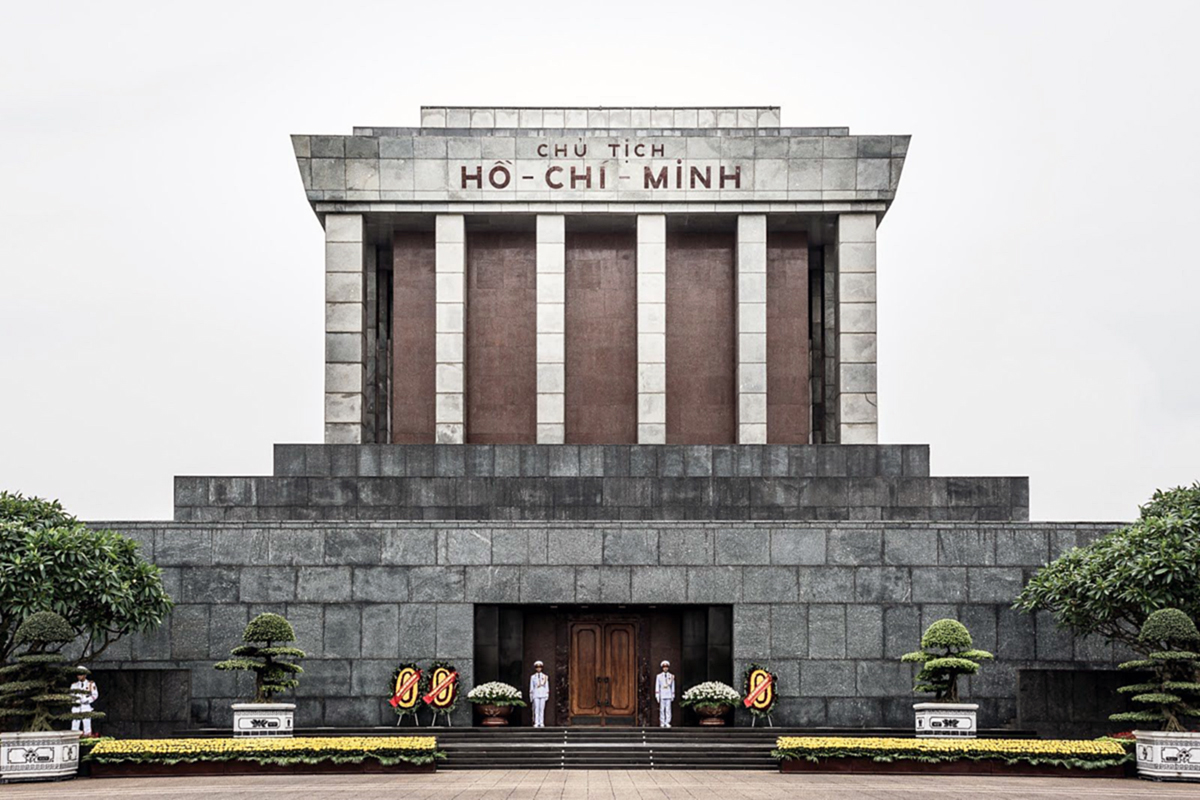
The Ho Chi Minh Mausoleum is one of the most solemn sites in Hanoi. The President’s embalmed body is preserved in a glass sarcophagus inside a dimly lit hall kept at a low temperature.
The mausoleum is generally open to the public in the morning, but it may close during certain periods of the year for maintenance and preservation work. Visitors are therefore advised to check the opening hours before their visit.
In his will, President Ho Chi Minh expressed the wish to be cremated and for his ashes to be divided among the country’s three regions. However, in response to the deep sentiments of the Vietnamese people, the authorities decided to preserve his body for the long term.
Today, the mausoleum allows people from across the country, especially those from the South, as well as foreign visitors, to come and pay their respects to President Ho Chi Minh.

Temple of Literature – Quôc Tu Giám

The Temple of Literature was built in 1070 during the reign of King Lý Thánh Tông. Originally, it was dedicated to the worship of Confucius and other great Confucian scholars. It also served as a royal school for the education of princes and the sons of high-ranking officials.

Its first student was Crown Prince Lý Càn Đức, the son of King Lý Thánh Tông and Consort Ỷ Lan. He was only five

(Photo: Archive)

years old at the time. In 1072, he ascended the throne and became King Lý Nhân Tông.

The Temple of Literature – Quốc Tử Giám complex consists of two main parts. The first is the Temple of Literature, a place of worship dedicated to Confucius and other great Confucian scholars. The second is Quốc Tử Giám, regarded as Vietnam’s first national university.
Originally, Quốc Tử Giám was reserved for children of the royal family and the aristocracy. It was later opened to students from ordinary families who were selected for their intelligence and exceptional talent.