SAPA

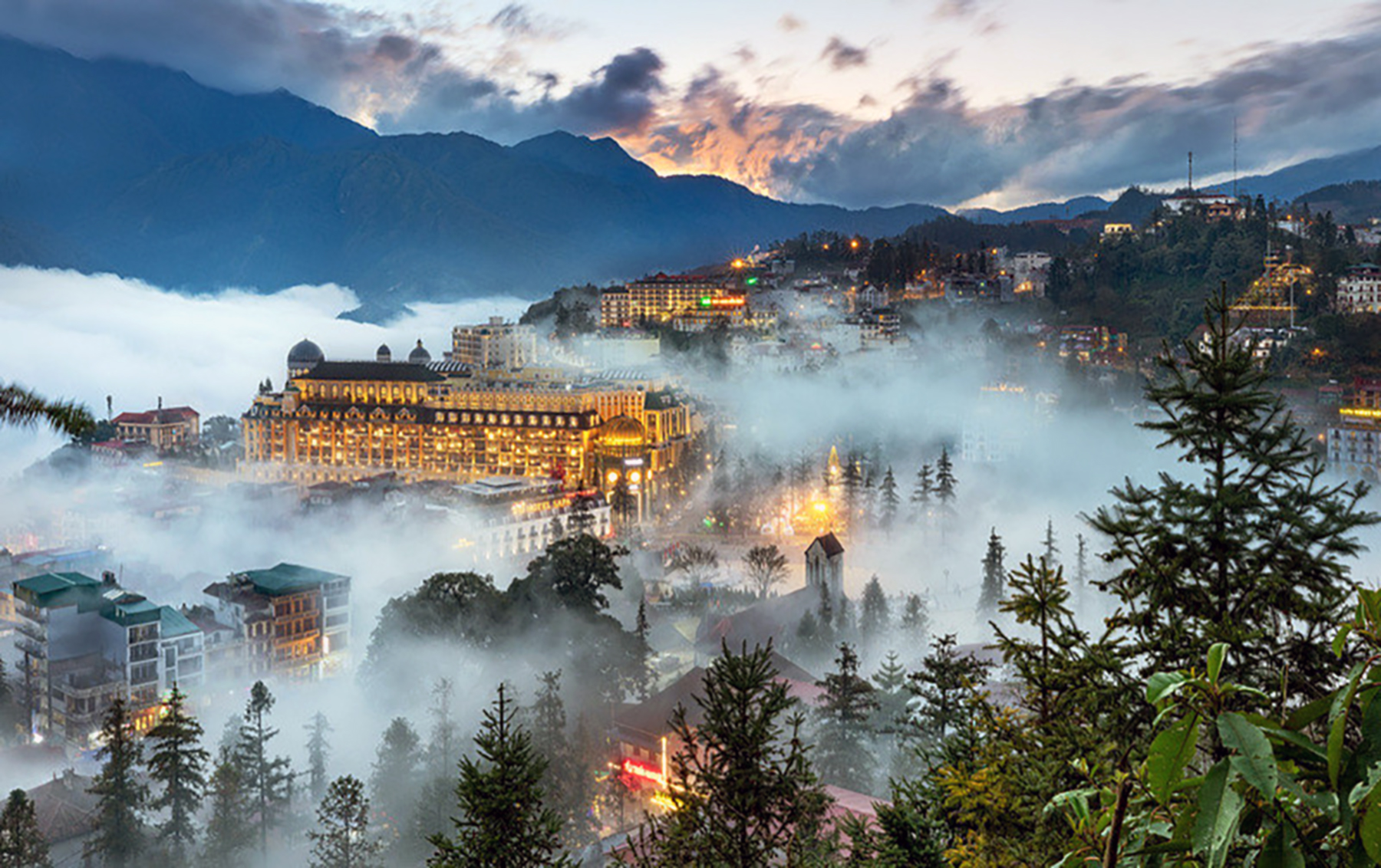
Located at the foot of the majestic Hoang Lien Son mountain range, just five to six hours by road from Hanoi via the expressway, Sapa is an appealing destination to visit throughout the year.


Best Time to Visit Sapa

From March to May and from September to November, when the weather is more pleasant and the landscapes are particularly beautiful.


Places to Visit in Sapa

(Photo: Archive)

Mount Fansipan

The origin of the name “Fansipan” remains uncertain, and several theories have been proposed. According to some sources, the peak was once called Hua Xi Pan, a popular expression that may be interpreted as “a huge sloping rock”. Another theory links the name to the Hmong language, where it may refer to the “mountain of rhododendrons”, due to the abundance of these shrubs on the mountain slopes.
Another explanation suggests that the name Fansipan may be connected to Phan Văn Sơn, a geographer of the Nguyễn Dynasty who is said to have accompanied the French in 1905 during mapping and border demarcation work between Vietnam and Qing China.
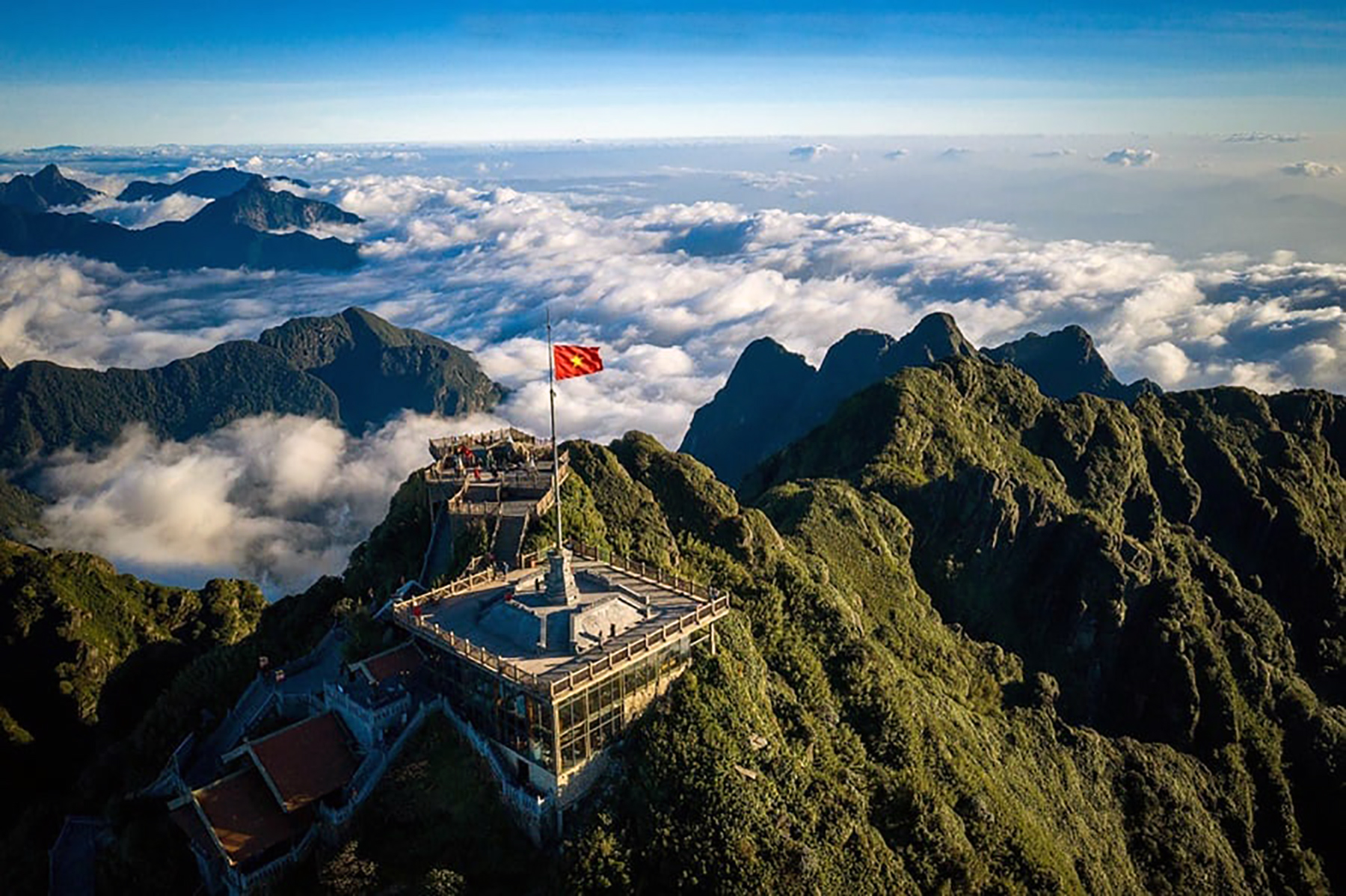
(Photo: Archive)

Rising to an altitude of 3,143 metres, Fansipan is the highest peak in Vietnam and in all of Indochina, which comprises Vietnam, Laos and Cambodia. For this reason, it is often known as the “Roof of Indochina”.
In the book La Conquête du sommet du Fansipan, published in French on 29 November 1935 by the Hanoi Geographical Association, Professor L. Salles, a teacher at the Albert-Sarraut School, described the first French ascents of the summit.
At the end of July 1905, Sergeant Denis, accompanied by Lieutenants Scherdlin and Benoit, was given the task of reaching the summit of Fansipan. It is believed that Denis may have reached the highest point alone. He left a fairly detailed description of a marker located on a rock at the summit, along with several accounts of the difficulties encountered during the expedition. The ascent took three days. Denis reported that the forest extended all the way to the summit, that rain accompanied part of the climb and that temperatures were extremely cold. To mark the highest point, he is said to have embedded three rifle bullets in a large rock, arranged in the shape of a triangle.
Shortly after this expedition, another mapping mission was carried out under the direction of Lieutenant Bourély. According to documents from the Geographical Service, Sergeant Dollo also reached the summit around 1 October 1905. His ascent is said to have taken eight days from the last inhabited settlements along the route. Thick fog, dense forest and the difficulty of identifying the highest point made the expedition both demanding and remarkable.
Today, Fansipan has become one of the major symbols of Sapa. It attracts travellers with its spectacular mountain scenery, cool climate and the unique experience of standing at the highest point in Indochina.


Ta Van Village

In the Hmong language, Tả Van means “great curve”. The name reflects the village’s setting, nestled against the Hoang Lien Son mountain range and overlooking the winding Muong Hoa River. For generations, Ta Van has been home not only to the Hmong people, but also to Red Dao and Giay communities.

(Photo: Collectée)

Ta Van Village is particularly renowned for its terraced rice fields. Shaped over generations by the patient work of local communities, they wind across hillsides and mountain slopes, stretching as far as the eye can see. Combined with the lush green mountains surrounding the valley, they create a landscape of remarkable natural beauty. Here, in the heart of this vast mountainous setting, visitors can breathe fresh air and enjoy a deep sense of peace.
Among the villages of Ta Van, Ta Van Giay has preserved local customs and the traditional way of life most strongly. Located within Hoang Lien National Park, it is considered the oldest village in the Ta Van area.

Rice cultivation remains the main livelihood of the Giay people. Local residents also practise traditional crafts, particularly the making of silver jewellery and traditional tools, which require precision, patience and skilled craftsmanship.
The Giay village in Ta Van has a history of nearly 300 years, dating back to the arrival of the first settlers who cleared the land and established the village. Several clans still live there today, including the San, Vang and Lu families. According to local elders, the San clan was the first to settle in the area.
Living at the foot of the mountains, close to valleys, rivers and streams, the Giay people have preserved much of their traditional culture, customs, beliefs and ancestral festivals to this day.

Cát Cát Village

Cát Cát is an old Hmong village located not far from the centre of Sapa. Established around the mid-19th century, it has long been a traditional home of the Hmong community, where many local handicraft skills have been preserved.

The village is particularly known for hemp weaving, embroidery and the production of brightly coloured brocade fabrics. Inspired by nature and everyday life, the patterns often feature trees, leaves, flowers, animals and traditional geometric designs.

(Photo: Archive)

For generations, the inhabitants of Cat Cat have also practised blacksmithing to make their own agricultural tools, such as knives, hoes and shovels. With sturdy blades and handles sometimes made from buffalo horn, these tools reflect the skill and ingenuity of local craftsmen.

In everyday life, Hmong women play an essential role. They take part in agricultural work, care for livestock and preserve traditional crafts such as hemp spinning, weaving and embroidery.

At the beginning of the 20th century, when the French arrived in Sapa, they were attracted by the wild yet romantic beauty of Cat Cat Village. Some colonial officials came here to rest and admire the mountain scenery. The French also made use of the waterfalls in the heart of the village to build a small hydroelectric power station, bringing a form of modern development to this mountainous region, which was difficult to access at the time.

There are several explanations for the origin of the name “Cat Cat”. According to one theory, the French, impressed by the village waterfalls, called the area “cascade”. The word was later adapted by local people into “Cat Cat”. Another explanation suggests that, in the Hmong language, “Cat Cat” means “below the market”, referring to the location of the village and its waterfalls further down the valley.


The Sapa rock carving site

(Photo: Archive)

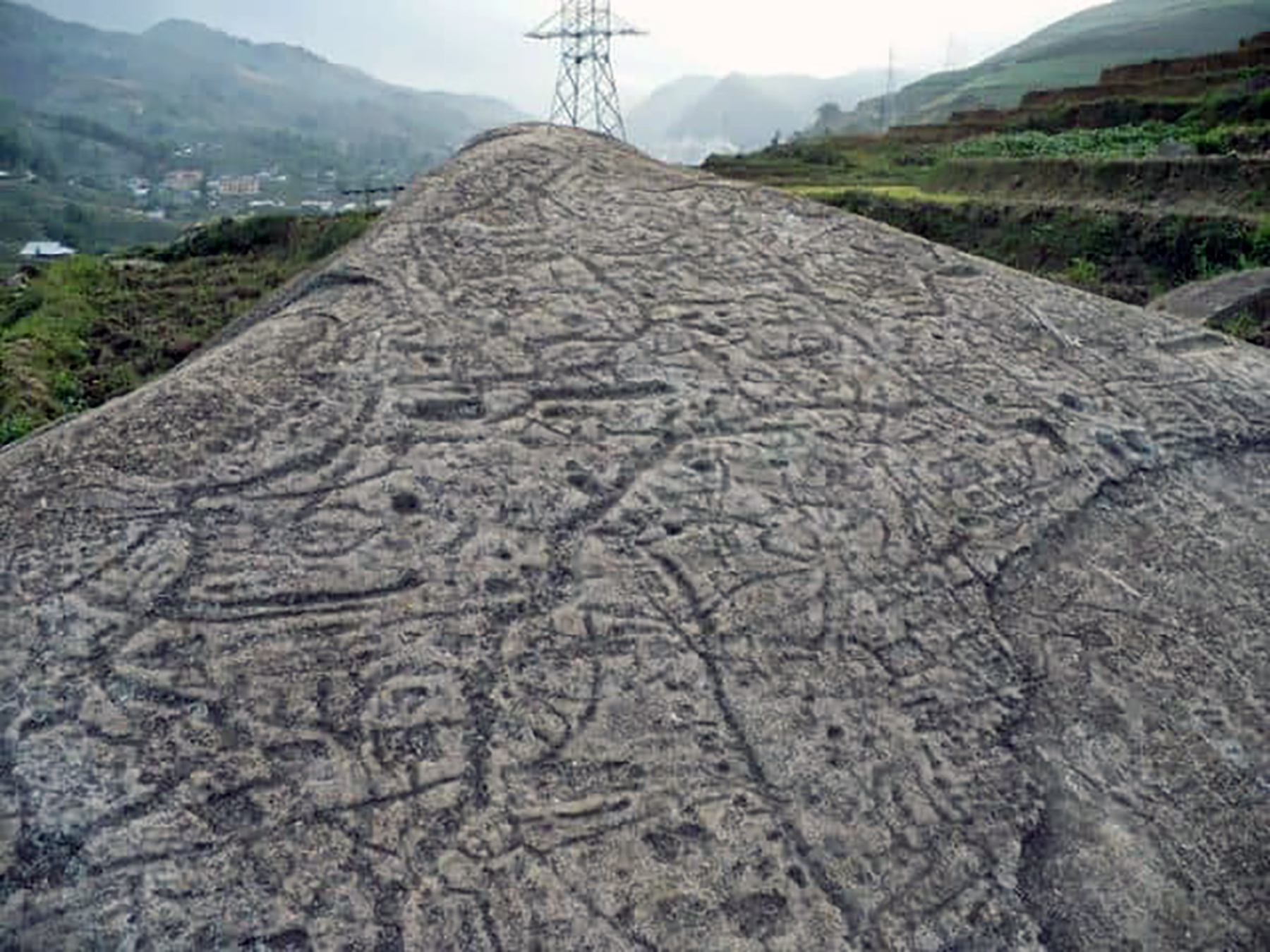
The Sapa rock carving site was discovered in 1925 by Victor Goloubew, a French archaeologist of Russian origin working for the École française d’Extrême-Orient. Faced with the many mysterious motifs engraved on the rocks, he proposed several theories about their origin and meaning.

The site covers an area of around 8 km² and contains nearly 200 stone blocks, providing evidence of ancient human presence in the region. The carvings feature a wide variety of forms, including stairways, human figures, paths, signs resembling writing, circular symbols evoking the sun, and other motifs associated with fertility and everyday life.

Malgré les nombreuses recherches menées sur ce site, la datation précise de ces gravures ainsi que leur interprétation restent encore incertaines. Elles continuent aujourd’hui de susciter la curiosité des chercheurs et des visiteurs.

Selon les récits transmis par les habitants locaux, notamment les Hmong du village de Phố, dans la commune de Hầu Thào, ces gravures seraient comme « le plus grand livre de pierre » laissé par leurs ancêtres. Certains chercheurs pensent qu’il pourrait s’agir d’une ancienne carte des Hmong, tandis que d’autres y voient une forme de récit gravé évoquant des événements, des batailles ou des croyances anciennes.

Muong Hoa Valley

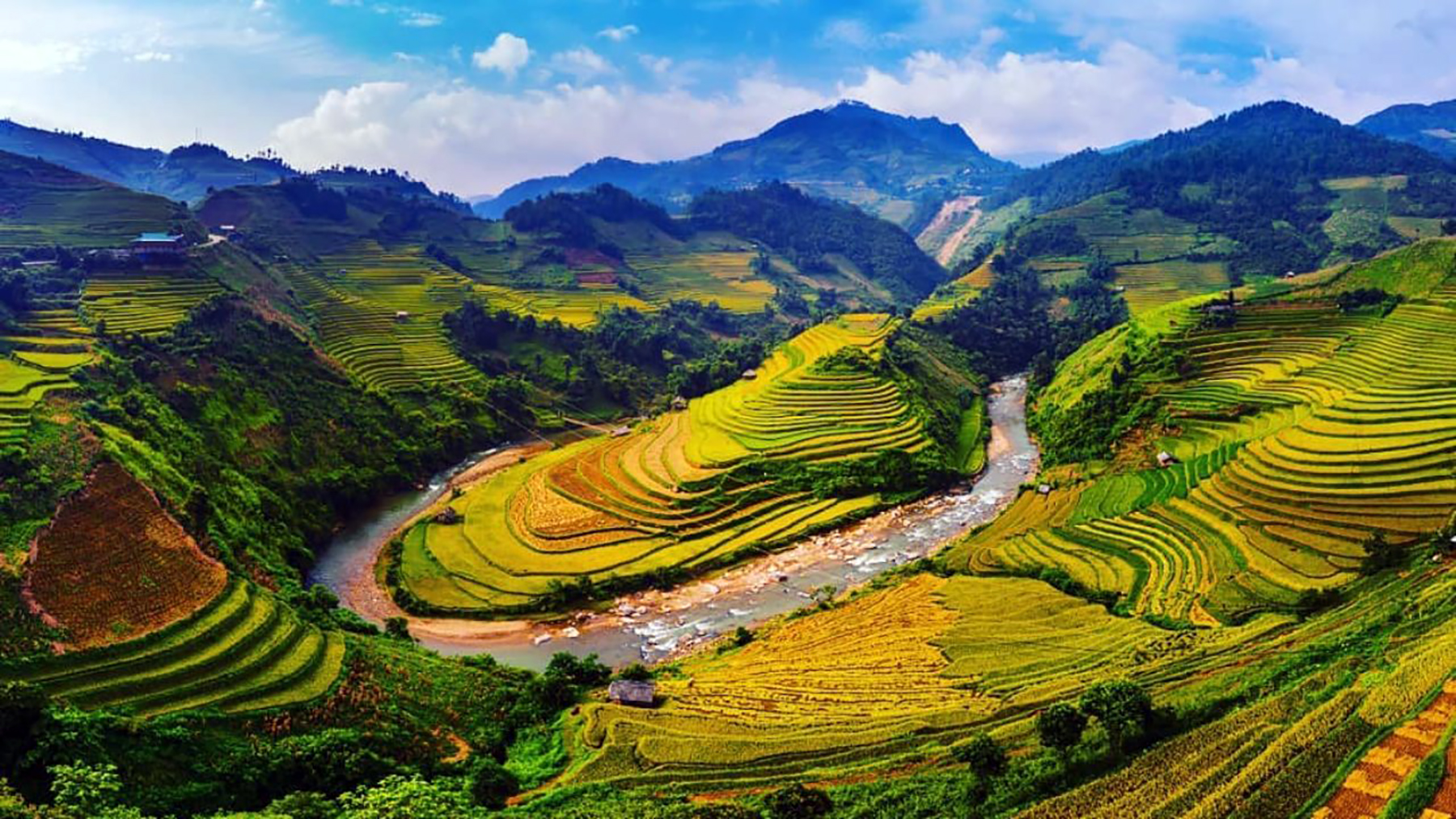
Sapa is home to many terraced rice fields, but some of the most beautiful and extensive can be found in Muong Hoa Valley. They wind along the hillsides, creating graceful natural curves and offering spectacular views.

In summer, when the rice terraces are covered in lush green, the valley seems wrapped in an immense ribbon of green silk following the contours of the landscape. With the arrival of autumn, the scenery changes dramatically as the ripening fields turn a brilliant golden colour, as if the entire valley were covered in a golden mantle.

(Photo: Archive)